From Nina: Seeing Glacier Bay is a moving and profound experience. As you sail in, there is a glacier (I think it’s the Pacific Crest Glacier) with a massive ice cave right in the front. Different glaciers look really different. One is called Johns Hopkins glacier, by an explorer who went to school there.
The cruise line treated the experience reverently. A US Park Ranger was on the boat a good part of the day, and her comments were piped throughout the ship. She said that John Muir came to Glacier Bay in the early 1900’s, then came back 5 years later, and noticed what seemed to him to be dramatic changes. It influenced his thinking about environmental risks and issues. Since it is currently the summer of the hottest year on record for Alaska, we heard “white thunder,” the sound of ice cracking and falling. Once we saw large chunks of ice break off.
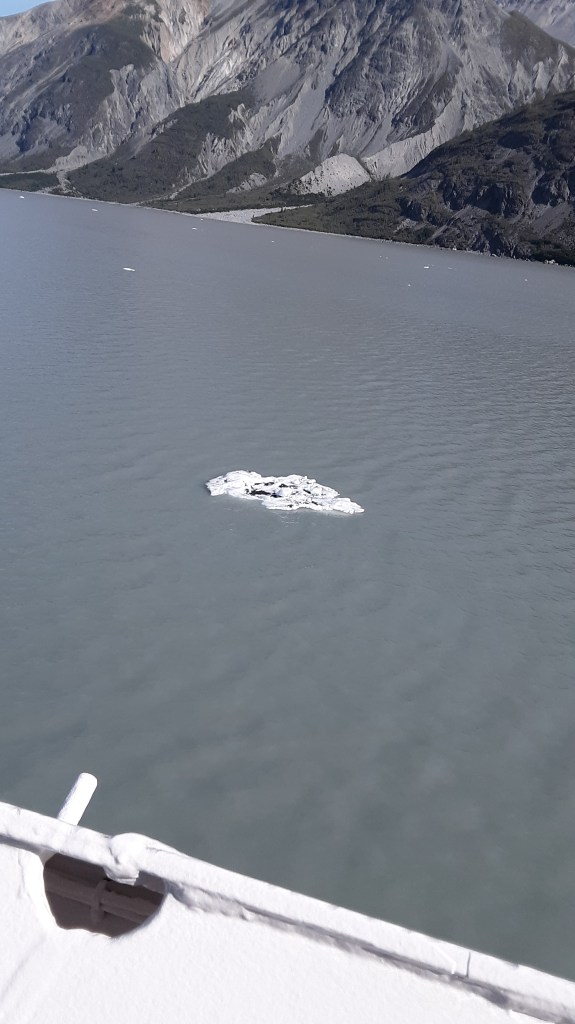
From Dan: Here’s a photo of a huge chunk of ice (probably 20 feet long) floating in the bay:
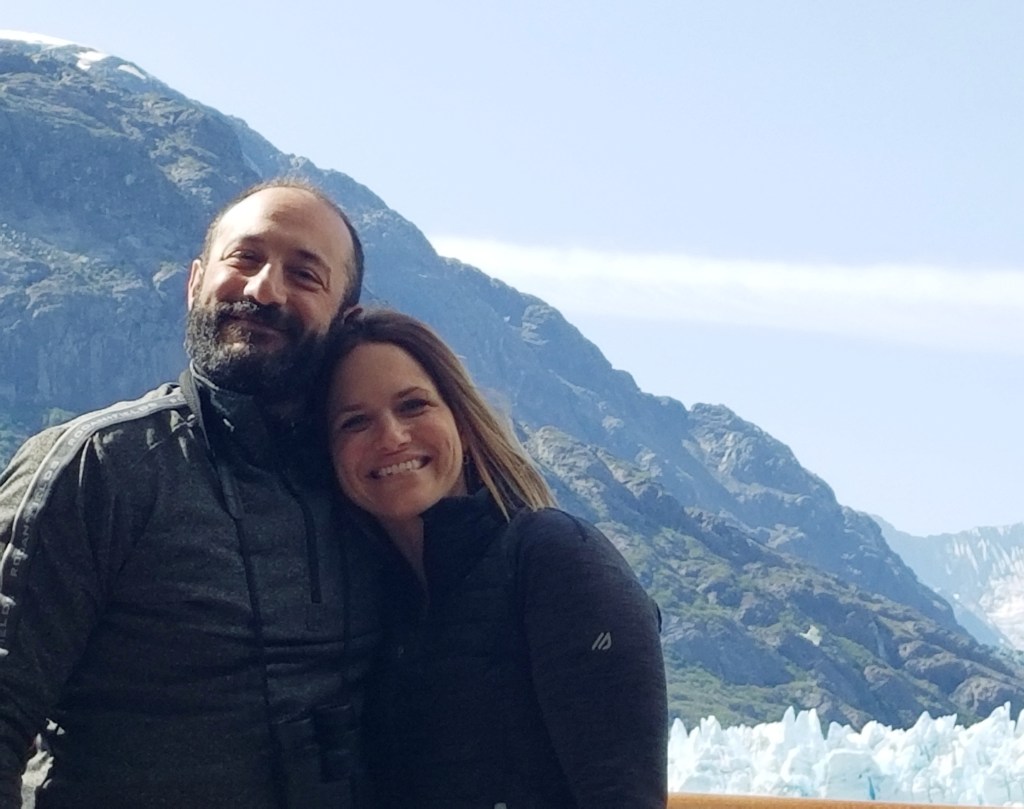
And some photos of a massive glacier as we approached. It was hard to assess the size from a distance, but this is about 250 feet high:
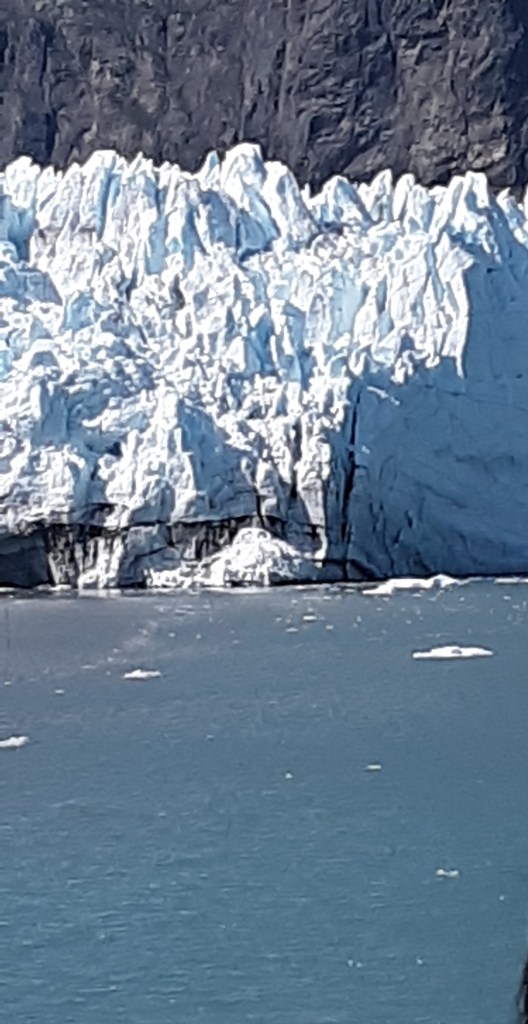
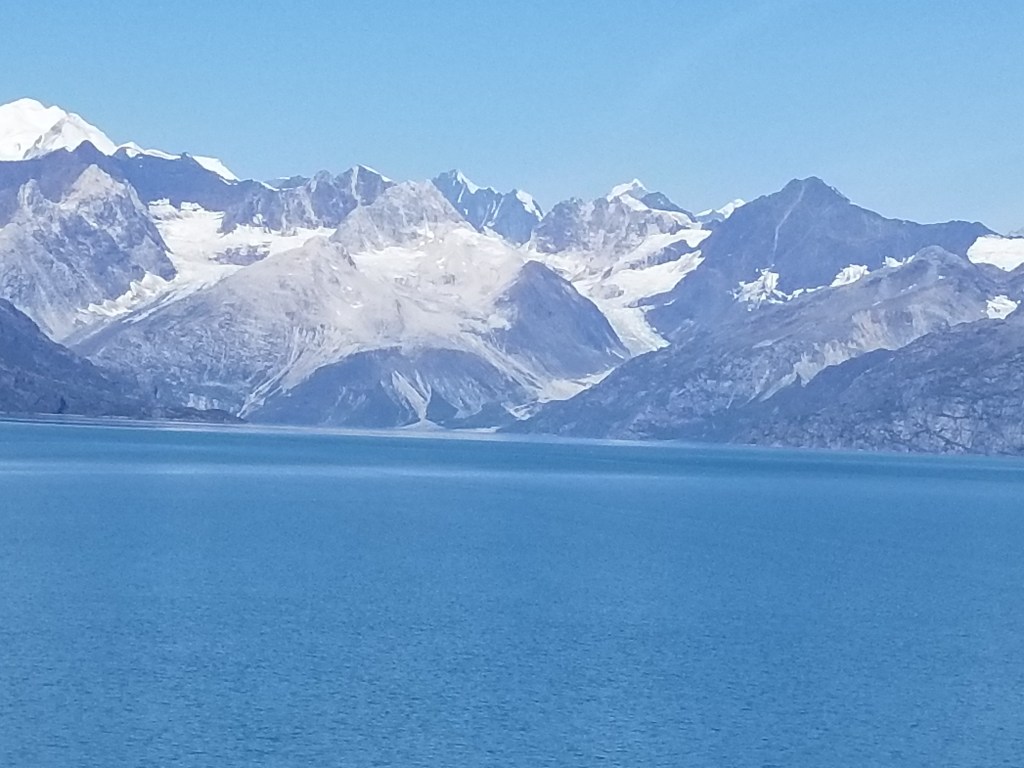
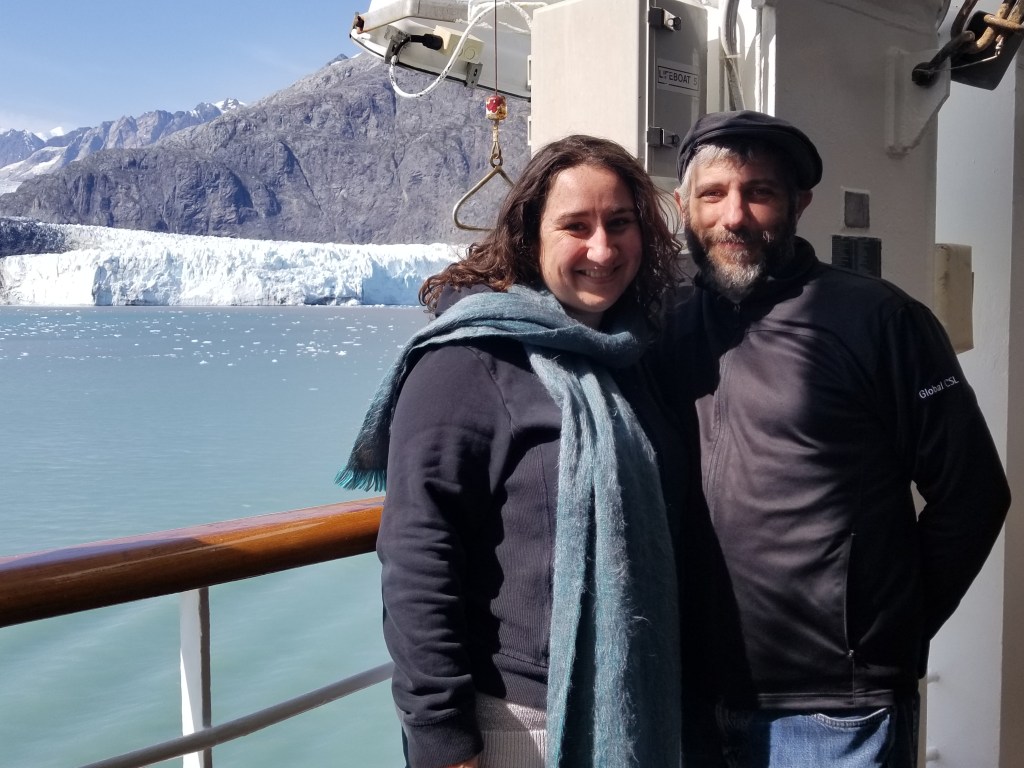
Back to Nina: The glaciers have changed over recently recorded time (the past 200 years), at one point taking over Hoonah Tlingit land, now retreating under global warming. While see the glaciers was astounding, it felt intensely sad. The continued existence of these glaciers, as well as the polar ice caps, is extremely tenuous. I wondered if our grandchildren would be the last generation to see them. what the ripple effects of their loss would be and how we would adapt. We simply must elect people who care about the environment and will fight global warming.
From Dan: And that was our last major component of the cruise. We continued for another day and a half at sea, arriving in Seward on the morning of Sunday, August 11. See “Post #4: Denali” and any posts after this one for Dan and Nina’s continued adventures,
 Fendels in Alaska