Post #22: How to get from A to B

By Dan

From the time we left our house on August 3, until the time we get home on August 24, we will have used a multitude of forms of transportation (in addition to walking). Here’s a list of sorts:

  • Various forms of automobile drivers (other than ourselves):
    • Taxi
    • Lyft
    • Other car services of various sorts (see post #18, for example)
  • Rental car (in Haines)
  • Airplane:
    • Full size jets (e.g., from SF to Vancouver)
    • Prop planes (e.g., from Homer to Anchorage)
    • Seaplane (from Haines to Juneau) [Note: Though run by Alaska Seaplanes, this was really just a small prop plane, with 9 passengers. It wasn’t on the water.]
  • Boats:
    • Full-size cruise ship
    • Ferry (from Juneau to Haines)
  • Train (from Anchorage to Denali)
  • Buses of various sizes, such as:
    • from Seward to Anchorage
    • from Denali to Anchorage
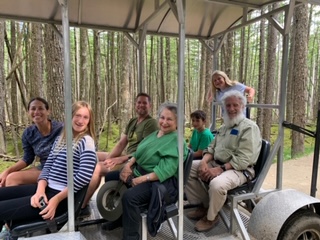
  • MOG (I forget what this stands for, but it was a bus-like vehicle that got us to the dog sled venue.)
  • Tram (in Juneau, going up Mt. Roberts)
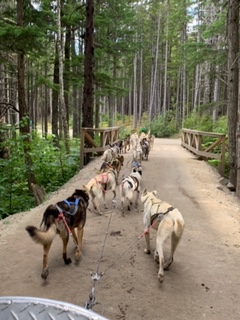
  • Dog sled (not for a long distance, but I imagine that most people have never gone any distance in a vehicle pulled by a dog)
  • Wheelchair: I’ve gotten mobility assistance at some of our airports, because I have trouble walking long distances.
  • Do elevators and escalators count as separate forms of transport?
  • We might actually take BART when we get in to SFO Sunday.

Post #21: Haines to Juneau to Sitka (Aug 22-23)

Just to catch things up, this is being written in the evening of 8/23. We took a seaplane from Haines to Juneau on 8/22 (where we stayed overnight and reconnected with some of our luggage, which we’d left there – intentionally – while in Haines).

In Juneau, we had a delightful lunch with Shelagh, the sister of our good friend Sandra Sands. Shelagh has lived in Alaska for quite a few years, and has an uncanny resemblance to Sandra.

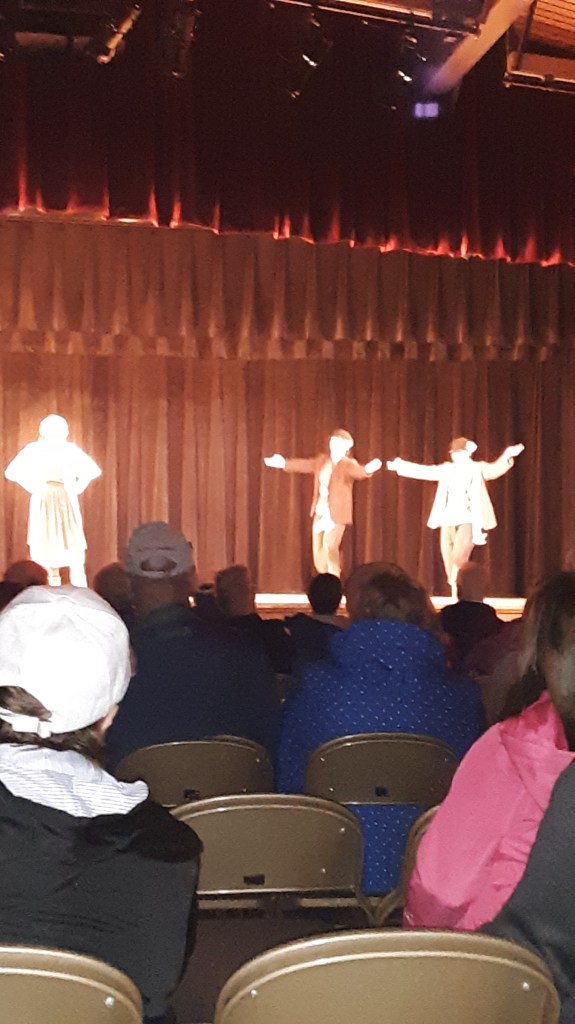
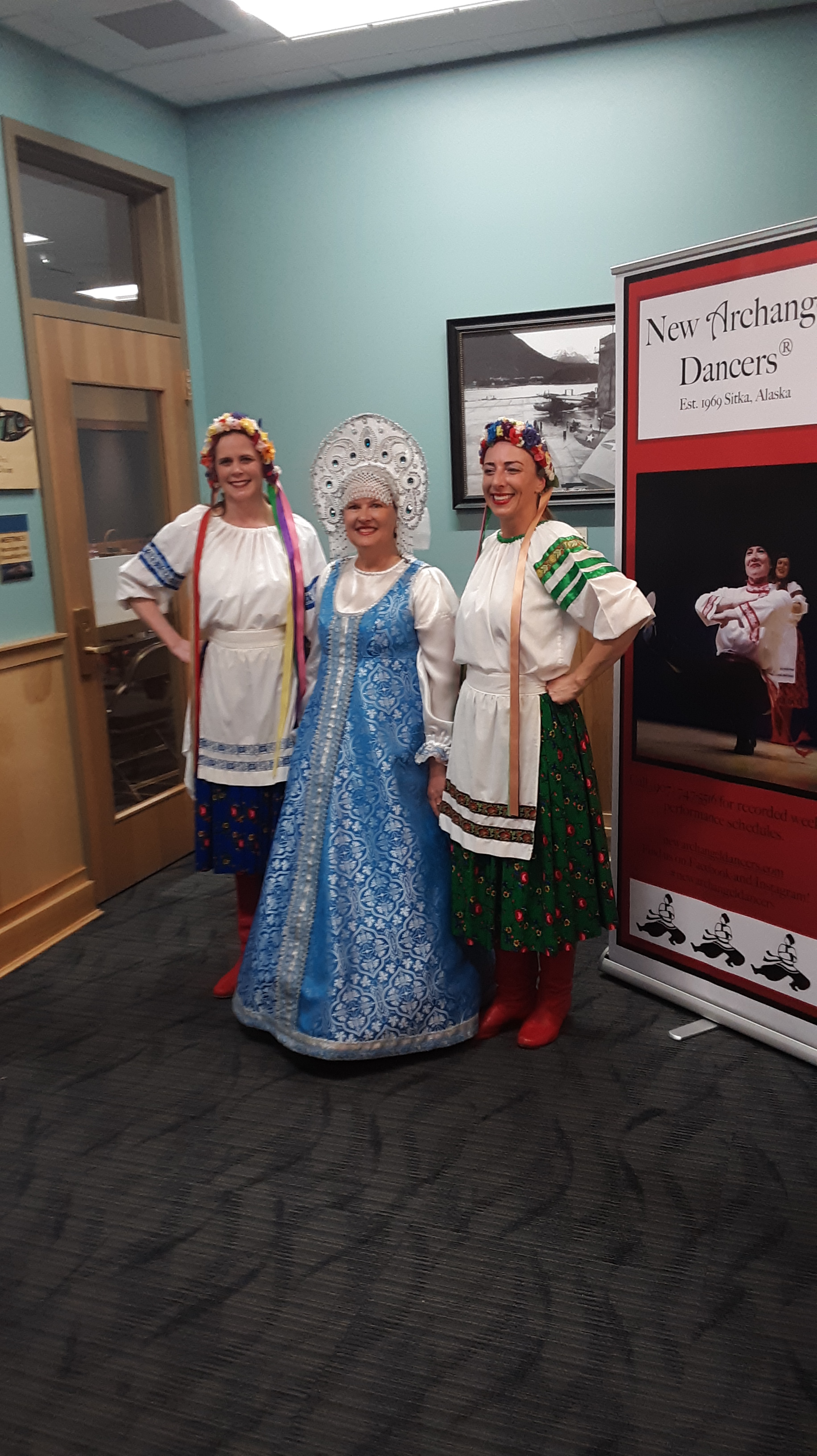
The morning of 8/23, we took a plane (about 25 minutes in the air) from Juneau to Sitka, which is rich in Russian heritage. We arrived in time to catch a dance performance by a group of women who have been doing Russian dances since 1969, when Centennial Hall was opened (marking 100 years since the US bought Alaska from Russia). It turned out that when the group started, none of the Sitka men wanted to participate (they didn’t think the enterprise would last), so women dance both the male and female parts. The group has had visiting dance teachers from Russia and elsewhere, and has traveled widely, in addition to performing locally in Sitka.

This afternoon (still 8/23), we had a delicious lunch.

“YOU ATE RUDOLPH?”

One of the specialties of Alaskan cuisine is reindeer meat. I’d had a conversation during the cruise week of our trip with Shoshana about whether reindeer (and other members of the deer family) are kosher or not. She didn’t think so. I later checked, and the answer is “yes, they are, but no, they’re not.” It turns out that while the animal is a kosher animal, the laws governing protection of wildlife (or something) make it such that reindeer are never killed in a way that satisfies kosher laws. So although I don’t eat non-kosher animals (which can be very limiting in seafood-heavy Alaska: crab, oysters, etc.), I don’t worry about how my kosher-animal meat is processed. I had delicious reindeer sausage for lunch.

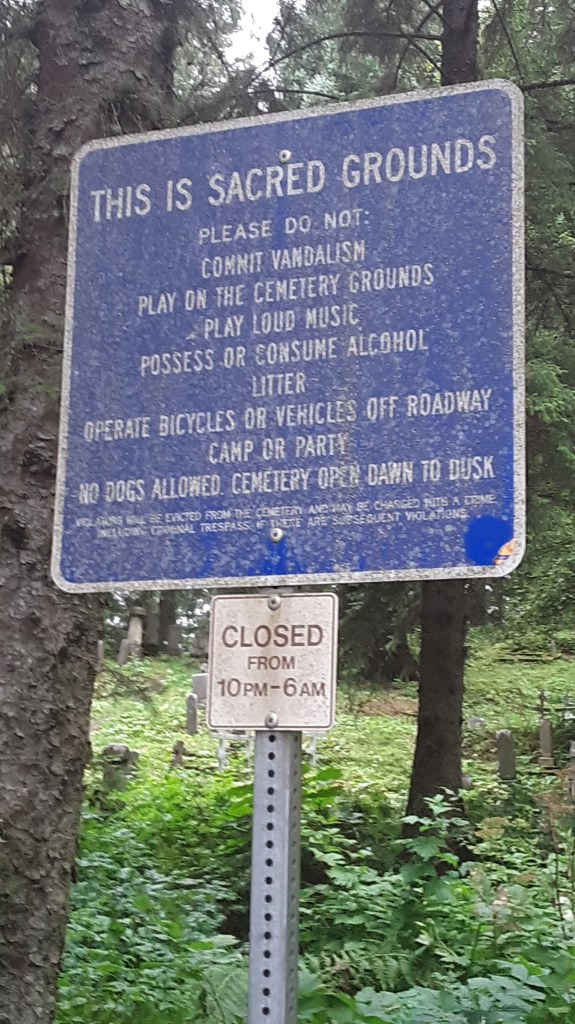
Finally, after lunch, we wandered through town, including the Alaska Native Brotherhood Hall, the Sheet’ka Kwaan Naa Kahidi Clan House, and the old Russian cemetery, whose entry sign is shown below:

Post #20: Haines and Klukwan

By Nina

Roughly forty years ago, I had the delightful and fascinating experience of working in Juneau on a training session for Native Alaskan tribal advocates. One of the subjects they requested was information on what to do when someone stole tribal artifacts. This was not part of our regular program, but we found someone in Juneau who could address the topic and gave him time in the program. Last year I randomly met a fisherman from Haines, Alaska who was in Berkeley for the winter. He told me that the village of Klukwan, where my tribal contact Tony Strong was from (and who had requested this topic), had recovered their artifacts and built a Heritage Center in the village with the help of the Smithsonian. Dan and I were clear that we should build this into our itinerary.

After a somewhat dicey experience with a road closed by wildfire in the Kenai peninsula (see Post #18 for details), we made it back to Juneau on 8/19 in time to take the early morning ferry on 8/20 to Haines, a delightful, quiet town about 4 hours north of Juneau by ferry. (Also see Post #18 for Nina’s comments about the ferry ride, and Post #19 for our afternoon in Haines that day.)

That night, we had dinner with Tony Strong, a fascinating Tlingit man who, when I met him, was the head of community services for the tribal corporation, which handles the tribal resources and lands. He spearheaded the successful efforts to get the artifacts back. Apparently unscrupulous art dealers were convincing individuals that those individuals had title to the artifacts, when in fact they are collectively owned by the tribe. These efforts resulted in theft of the artifacts and sale to private donors without compensation to the tribe.

Tony regaled us over dinner with the details of the recovery saga. My favorite, among the many stories he told us, was the one where his sister, who lived across the street from the klan house (where the artifacts were kept) got wind of a plan to steal them and realized that the perpetrators (tribal members) were on their way to the village. She called Tony for advice. At that time, he was working in DC on implementation of the law that protected the rights of Indian tribes to retain custody of their children whenever possible. Tony advised his sister to have Uncle Elmer cut down a few trees and block the one road into the village. She contacted Uncle Elmer, whose response, according to Tony, was “All-righty.” He cut down the trees and blocked the road, and the would-be thieves could not get through.

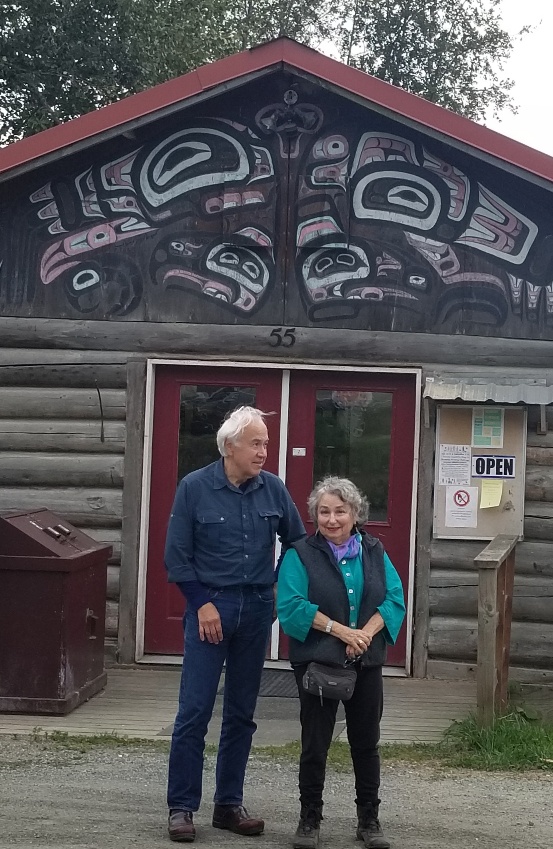
The photo below is of Tony and me:

The next morning (8/21), before heading to Klukwan, we went to the Haines Sheldon Museum, and happened to meet a scholar who specialized in the Tlingits. He asked how we heard about Klukwan and I described my experience 40 years ago. He asked my name and when I told him, he asked if I had had a different last name then (which I did). When I told him my previous name, he said he recalled seeing our training materials in the tribal archives and recognized my name! What a surprise. [Added by Dan: This scholar actually said to Nina, “You’re a celebrity!”]

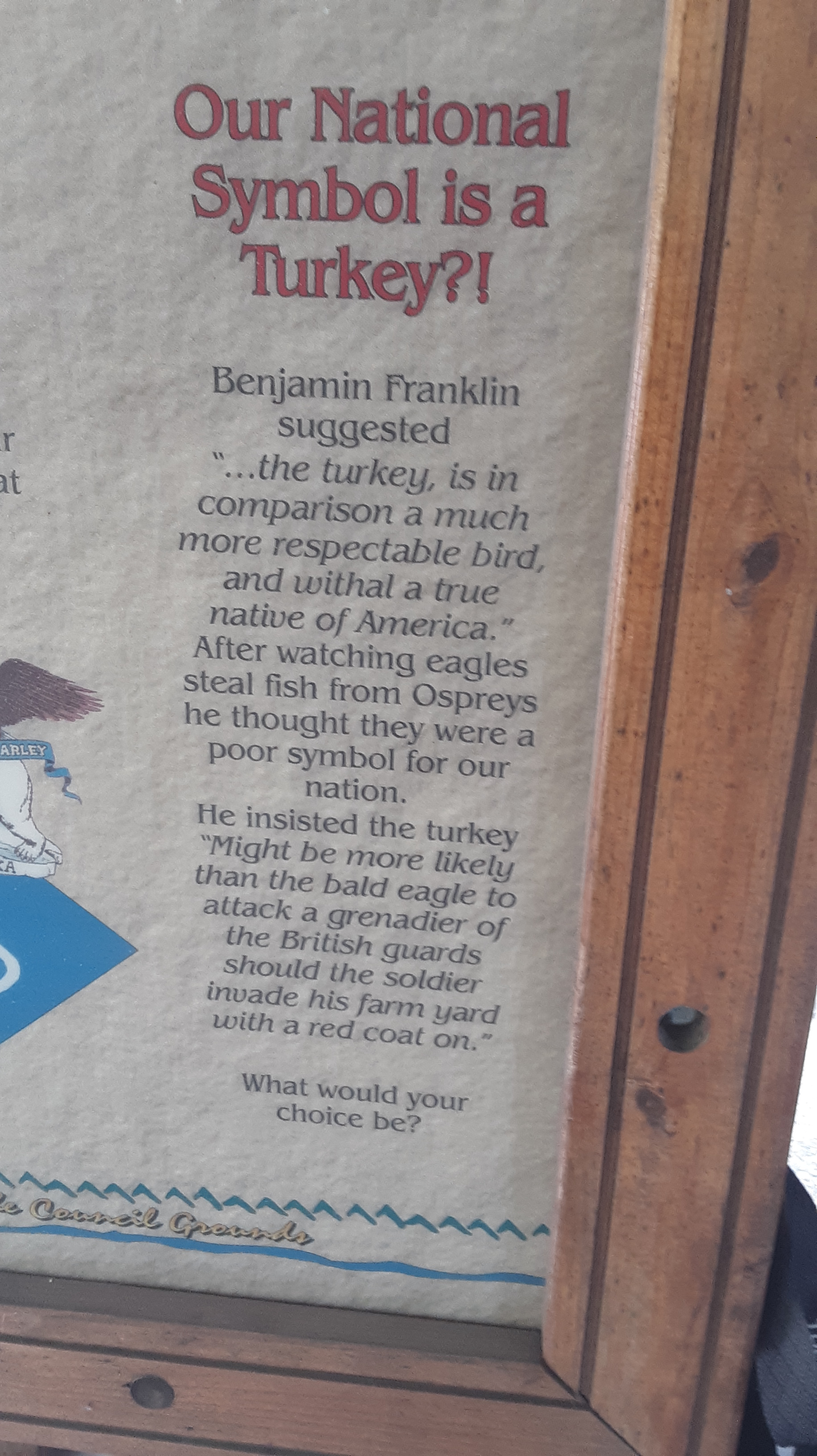
<From Dan: Here are a couple of photos from the Sheldon Museum. The first resembles a “match the picture” set of children’s playing cards that we bought years ago (in Vancouver?). The second will amuse those familiar with Stan Freberg (I hadn’t realized that there was validity to Freberg’s related skit.)

<Nina again>: In the afternoon of 8/21, we headed to Klukwan to see the heritage center. Tony asked his brother Jack to guide us. He was amazing, talking about his own people’s history and legends. Many of the photos in the exhibit were of the grandparents and other ancestors of Tony and Jack, as their family was very prominent in the village.

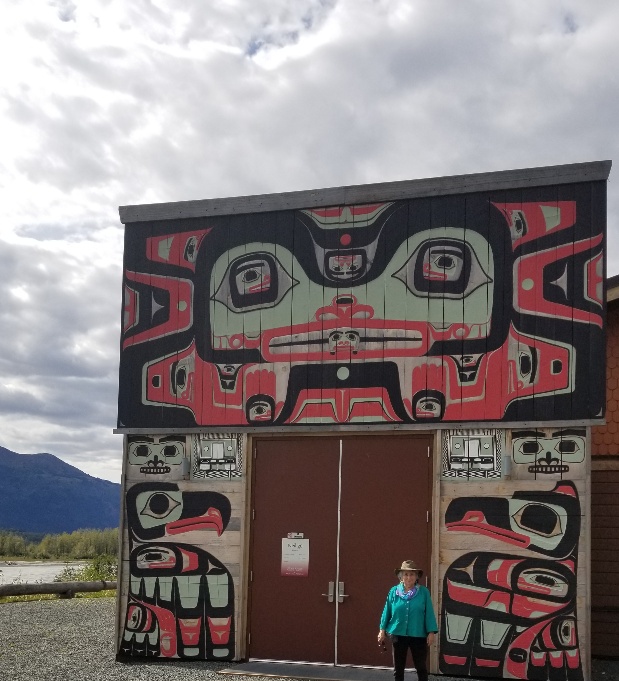
The photo below is me outside the heritage center building:

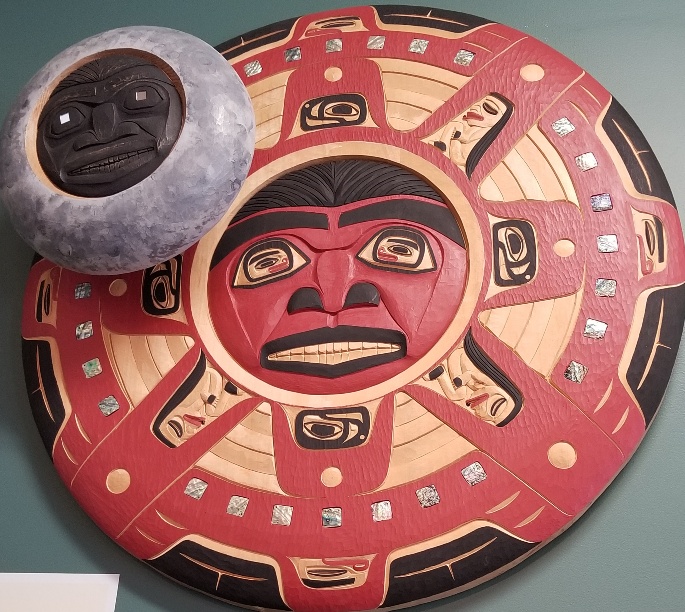
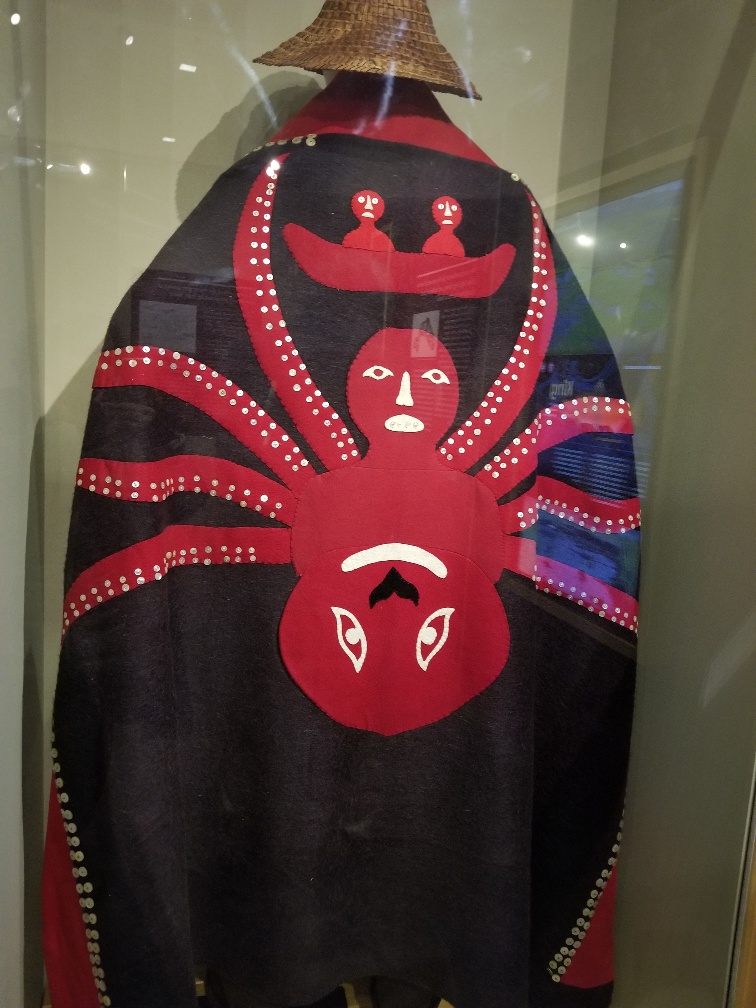
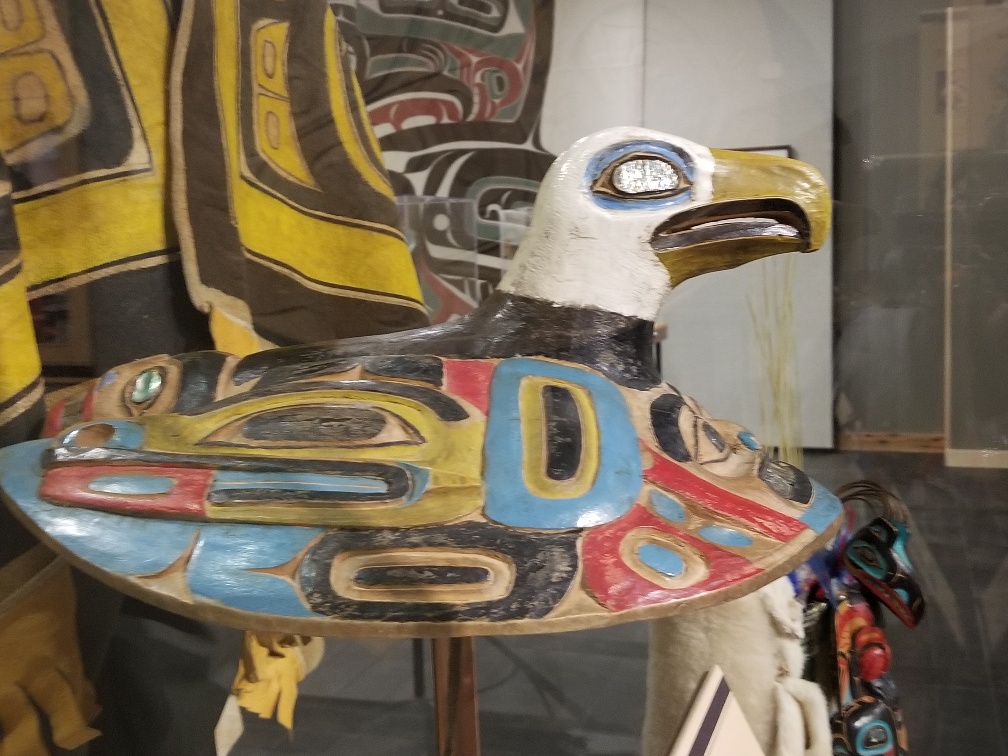
When we came to the first room of recovered artifacts, I was blown away. There were these 400-year-old pieces which experts agree are some of the finest examples of Northwestern Indian art that currently exist. With the help of the Smithsonian, they were beautifully displayed and very dramatically lit. I was so moved to see them. We also saw some artifacts from the “frog house” that had just been recovered a month ago. Later, Tony showed us around the village. The visit had been a mind-blowing experience.

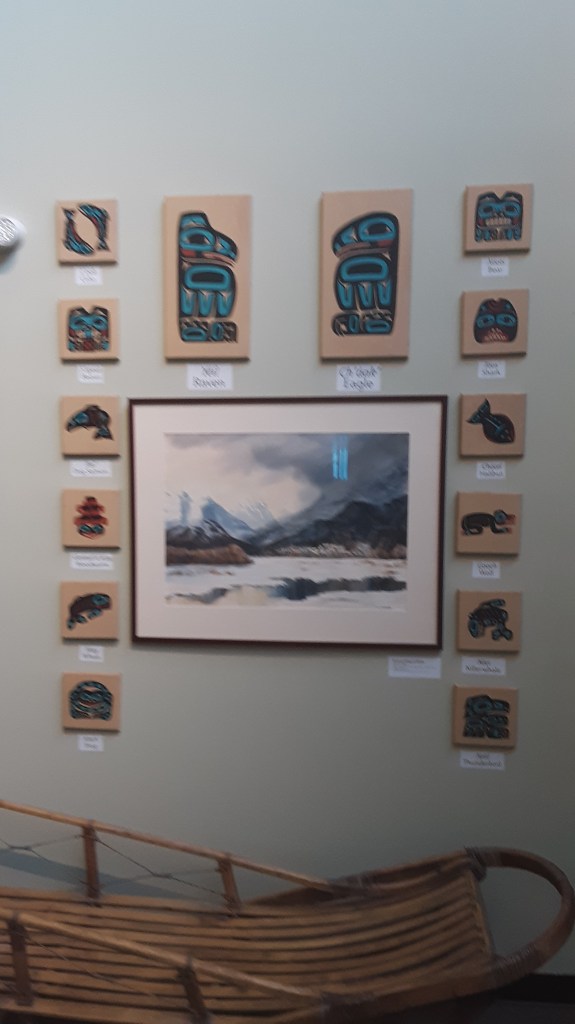
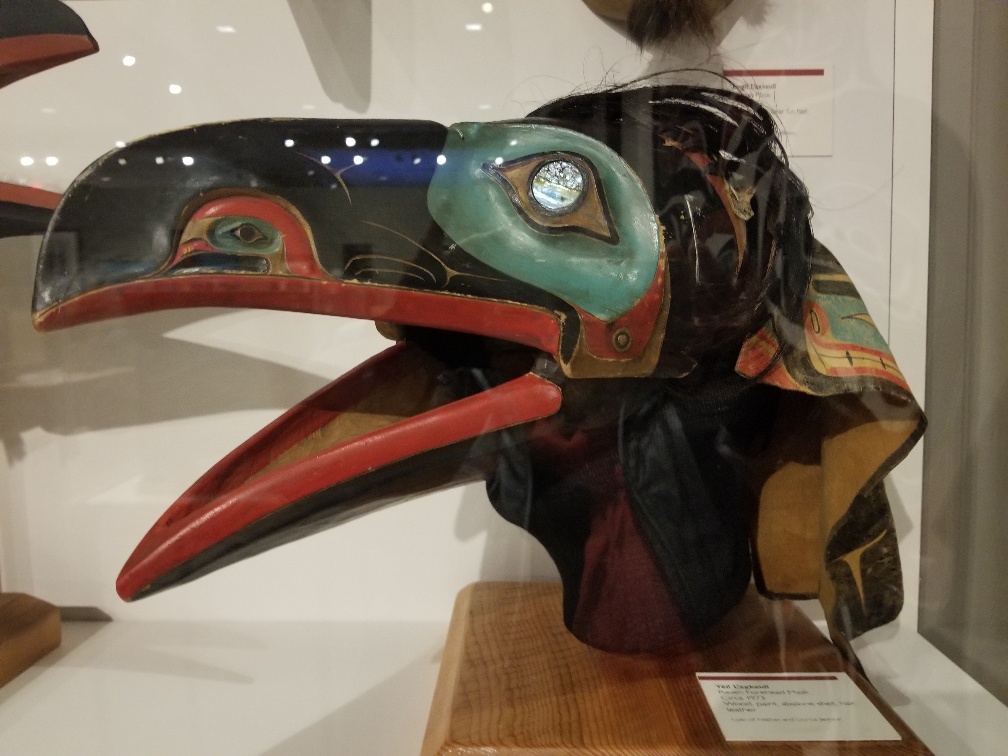
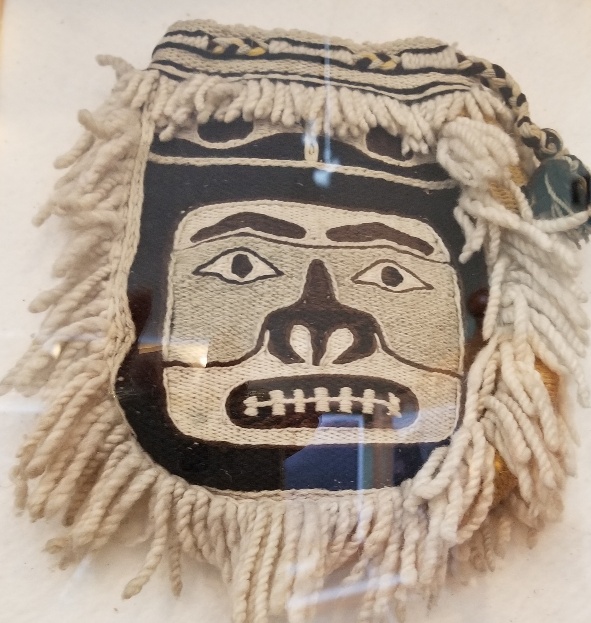
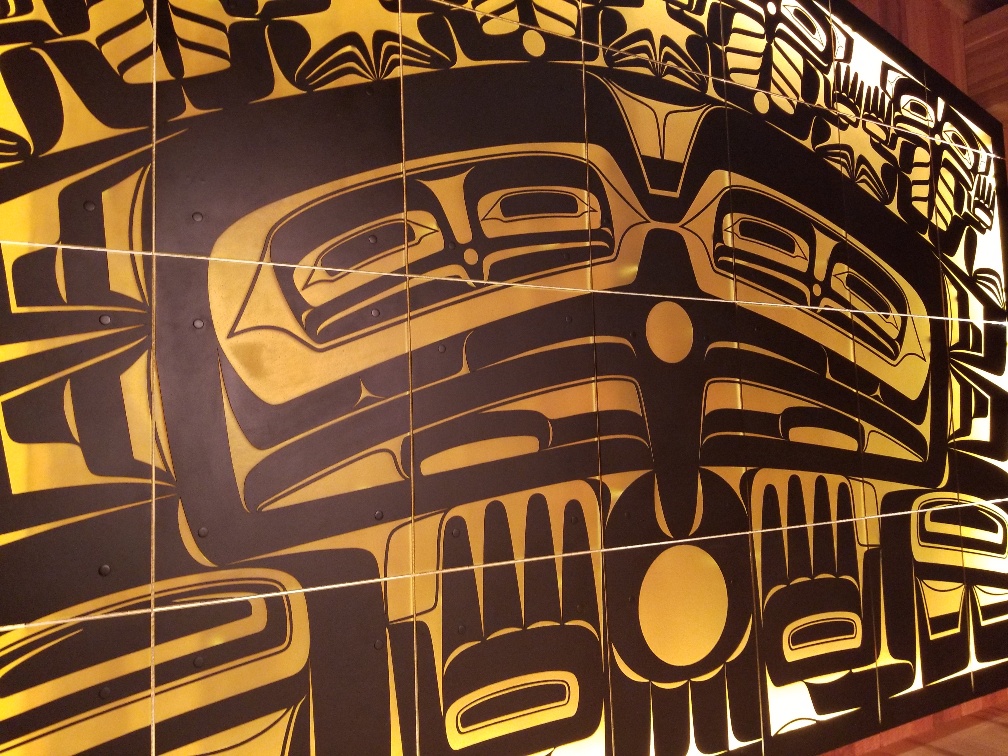
Here, for your viewing pleasure, are some of my favorite examples of Tlingit art:

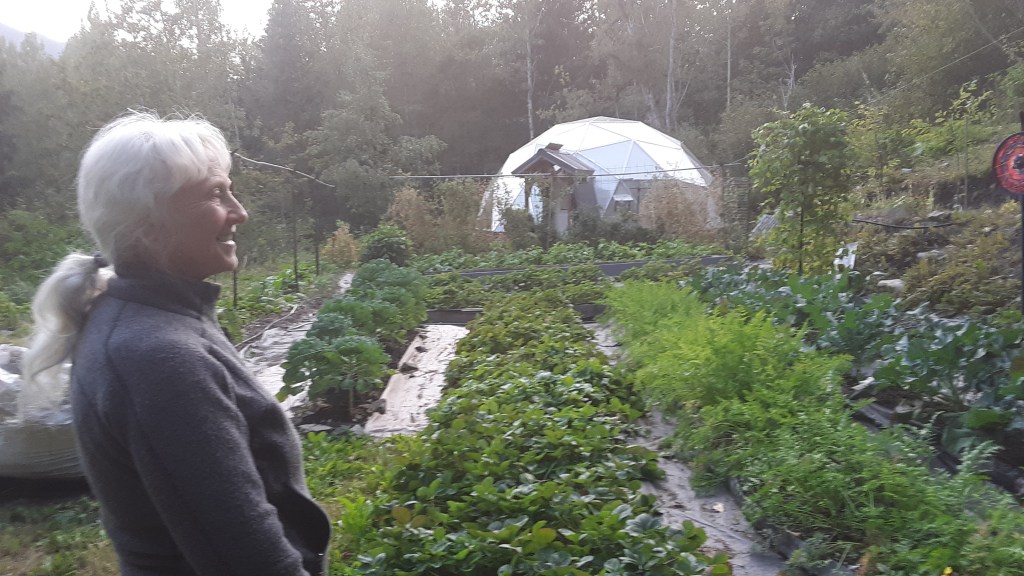
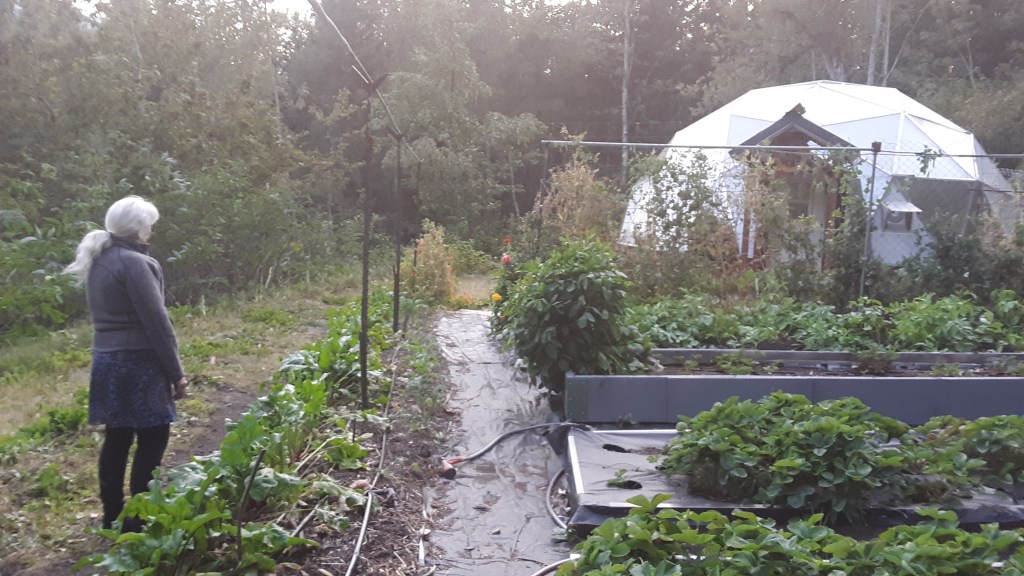
Later that evening, after leaving Klukwan, we visited some people we met through Servas, an international friendship group where people can host or visit folks in other places. They happened to live 10 miles up the road from Klukwan (almost in Canada). He is a retired boatman on the Alaska ferry and she is a retired naturalist and educator. We had a delightful evening with them. They had the most beautiful gardens. Here are a couple of photos of Mardell and her garden:
Post #19: Haines Hospice and “Hammer Museum”

By Dan

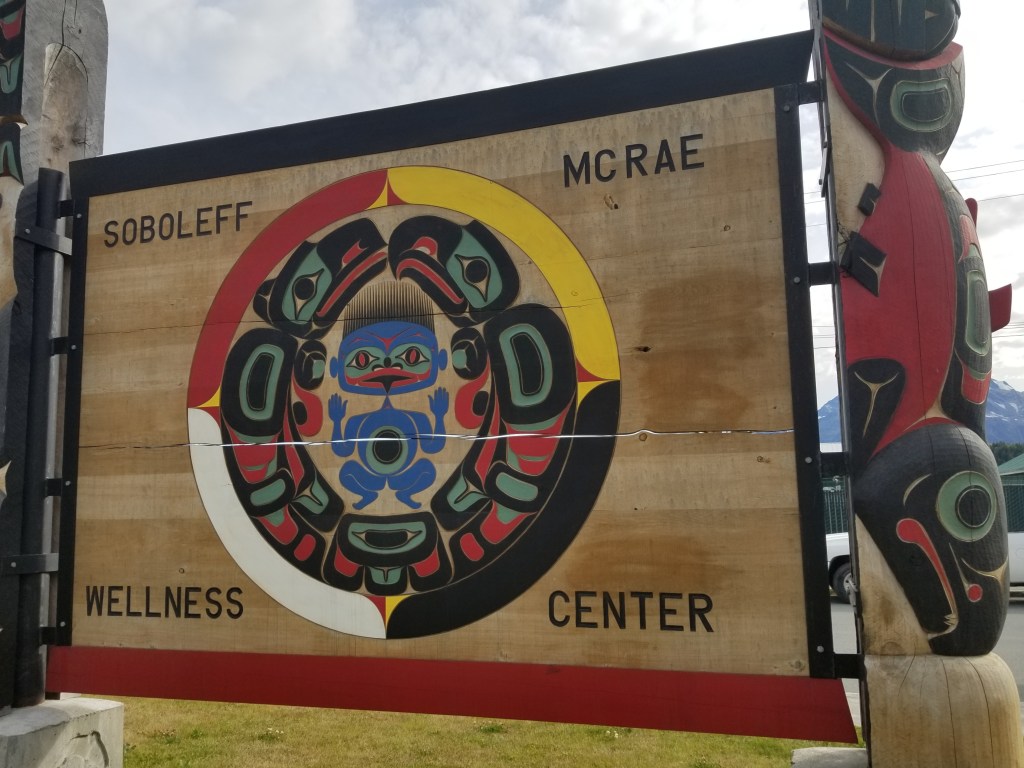
As noted in the last post, we arrived in Haines on the morning of 8/20. Through our Servas connection (see Nina’s Haines/Klukwan post, which reveals the reason for this whole escapade), we’d gotten connected with folks from the all-volunteer Hospice of Haines, and arranged to meet with them, since Dan is so involved with end-of-life issues. We had a wonderful meeting with Shannon McPhetres, who is the volunteer coordinator for the organization. Nina and I shared experiences and ideas with her, about public education, about training of volunteers, and so on. This hospice is unusual in that it provides personal support services but not medical care. The town has no hospital, but does have 3-4 doctors, some of whom come just for short stints. You might be interested in reading Heather Lende’s book, “If You Lived Here, I’d Know Your Name,” to get a sense of Haines life. (Thanks, cousin Risë, for sending us the book.) Heather wrote for the local weekly paper, including the obituary column. The beautiful sign here is outside the building where the hospice has its office.

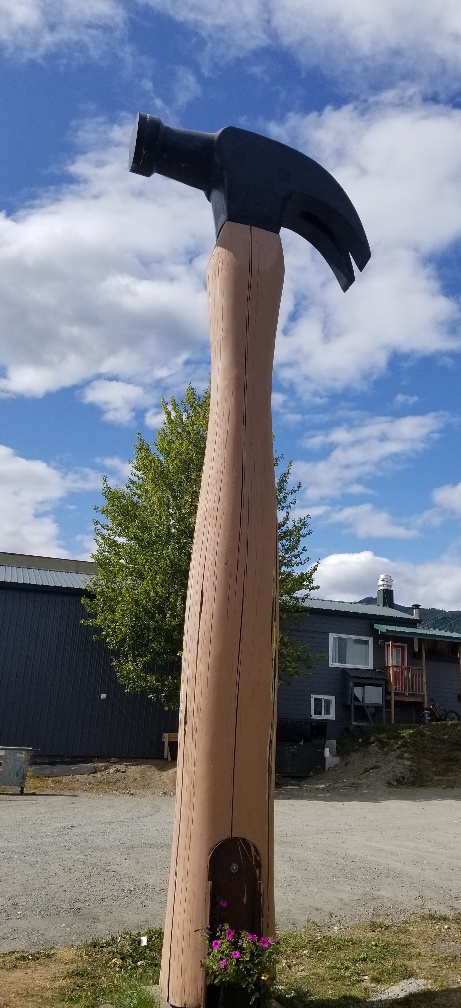
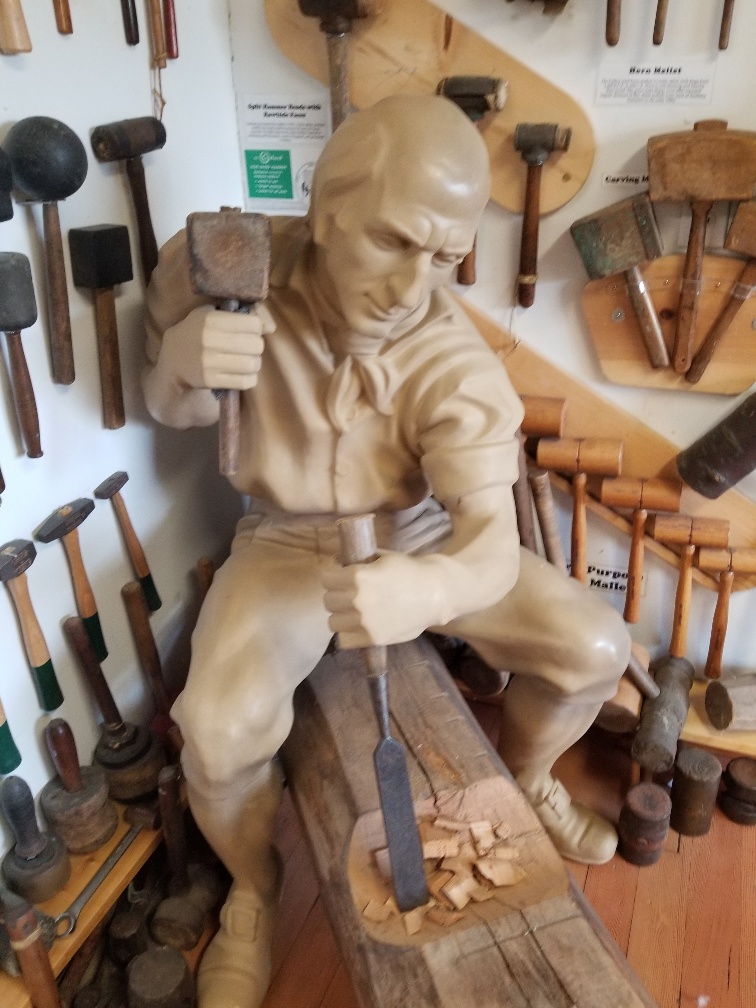
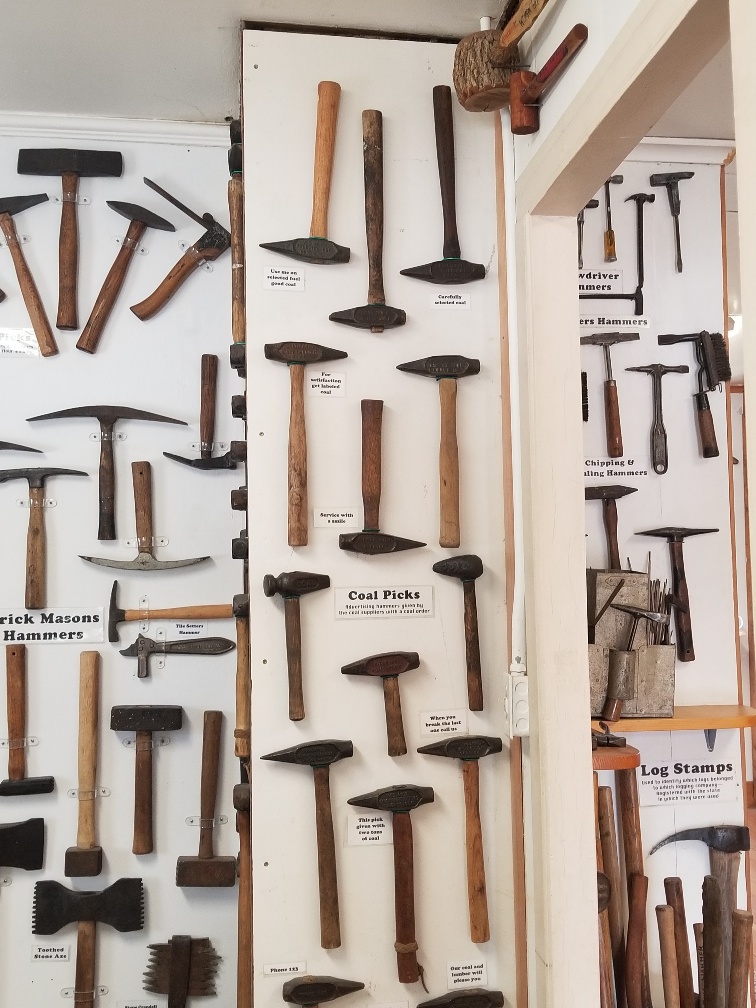
After our meeting, Nina and I both nosed around the town a bit before dinner, including the unique “Hammer Museum” (thanks for the tip, Fred), which owns over 7000 hammers of all sizes, shapes, and purposes. (They only have room to display about 2000.)

Here’s the giant hammer (20 feet high) outside the building, and then some shots from inside. The whole project is the obsession of an individual from Haines.

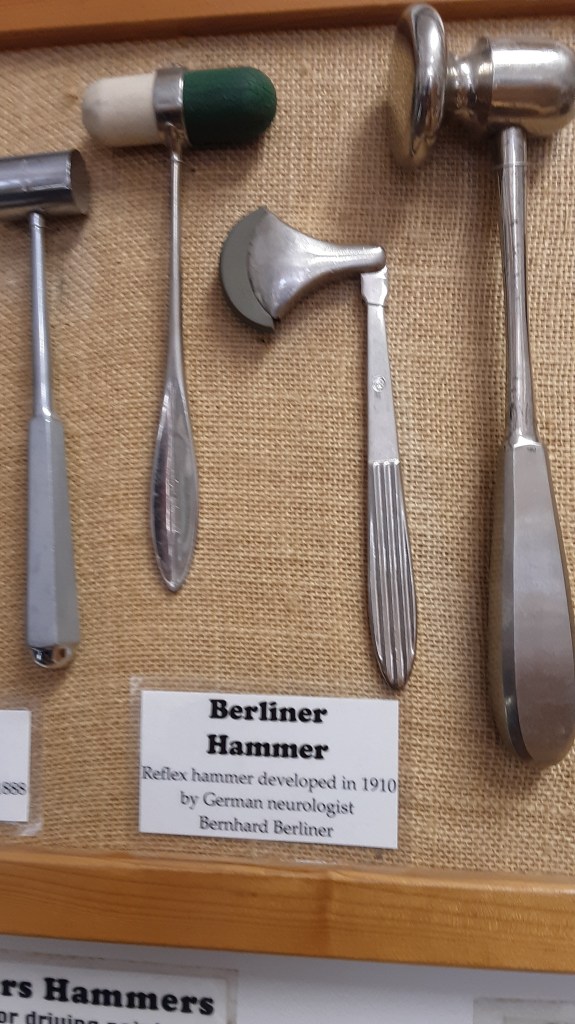
But what especially grabbed my attention was the item below, labeled “Berliner Hammer: Reflex hammer developed in 1910 by German neurologist Bernhard Berliner.”

We have a relative (great-uncle of my late wife) of the same name, who was, indeed, a neurologist, and would have been about 25 in 1910. I’ve been in touch with his daughter, Gabie, who did not know of any such invention by her father, but it seems unlikely that there were two neurologists of the same name. Gabie is investigating further. FLASH UPDATE: Gabie has just emailed me to say that her son (also Dan) has confirmed that Gabie’s father is, indeed, “the one who invented (or more correctly advanced) the reflex hammer).”

Post #18: Homer to Juneau to Haines – an Alaska Experience (August 18-20)

by Dan

We left Homer the morning of 8/18, intending to drive back to Anchorage for a flight that evening to Juneau (and then go on to Haines). But halfway to Anchorage, the traffic was at a complete standstill. There was no official information, but cars were turning around and heading the other way. A couple of inquiries revealed that the road ahead was closed due to a fire, and wouldn’t reopen until at least the next day. I naively asked what the alternate route was. Answer: A laugh, and then “there is none.” So we backtracked toward the nearest town – Soldotna – and cleverly called ahead for a place to stay. We got the next-to-last room at the hotel! Alaska Air cooperated in changing our Anchorage to Juneau flight from Aug 18 to Aug 19.

Next morning (Aug 19), it seemed still unclear if the road would open, so we contacted Marjy, our amazing Native-Alaskan travel agent. She said there were no flights available out of the nearest airport, in Kenai, but we could go back to Homer and get a flight to Anchorage from there. That sounded reasonable, except. . . . We had a rental car from Budget, which has no office in Homer. So Marjy helped arrange for a ride from the Kenai airport (where we dropped the car) back to Homer. Marjy is fabulous! If you’re ever planning a trip to Alaska, let us know and we’ll put you in touch with her.

So here we were in Homer (again, but at the airport), waiting for our 4pm flight to Anchorage, to catch our 7pm RavnAir flight to Juneau. Sounds easy, right? After all, the flight from Homer to Anchorage is under an hour.

But then it turned out that Ravn Air added an extra flight, and so ours was delayed. Once again, a call to Alaska, and we got switched to the 8pm out of Anchorage. We made it, with about an extra 30 minutes to spare, and finally got to Juneau that night.

Our transportation from Juneau to Haines the next morning, Aug 20 (more about Haines itself and why we were going there in a later post) was yet another story. There are two ways to go: ferry (a beautiful, 4+ hour ride) or seaplane (a quick trip). We had opted for beauty, and Marjy had booked us on the ferry. But some time in July, the Inland Boatman’s Union, who operate the ferries, went on strike, so we switched to the seaplane. A day or two before we left home, the strike settled, and we were back to the ferry.

<From Nina: We had a wonderful conversation on the ferry with a 3rd-generation Alaskan woman from Skagway, and a Tlingit family. The Tlingits are the largest tribe in southeastern Alaska, and have a history of trading across Alaska, down to SF, to Hawaii and even to Japan. They had a reputation as fierce warriors and talented traders, and were very powerful in this part of Alaska.>

The final mix-up on this was that when we got off the ferry in Haines, our car rental was not at the ferry dock but at the airport, because our final change of transport hadn’t gotten communicated to Marjy’s friend from whom we were arranging the rental. That was a minimal problem, and we settled into our hotel in Haines by about noon on 8/20.

Post #17: Homer (August 16-18)

by Nina

(Note: The next group of posts, #17-20, were written August 22-23, and published August 23 from Sitka.)

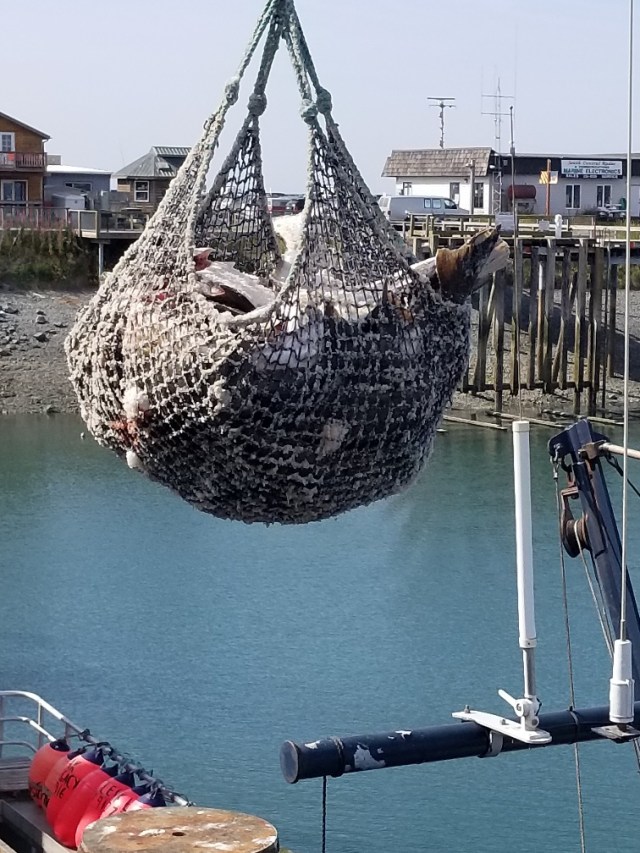
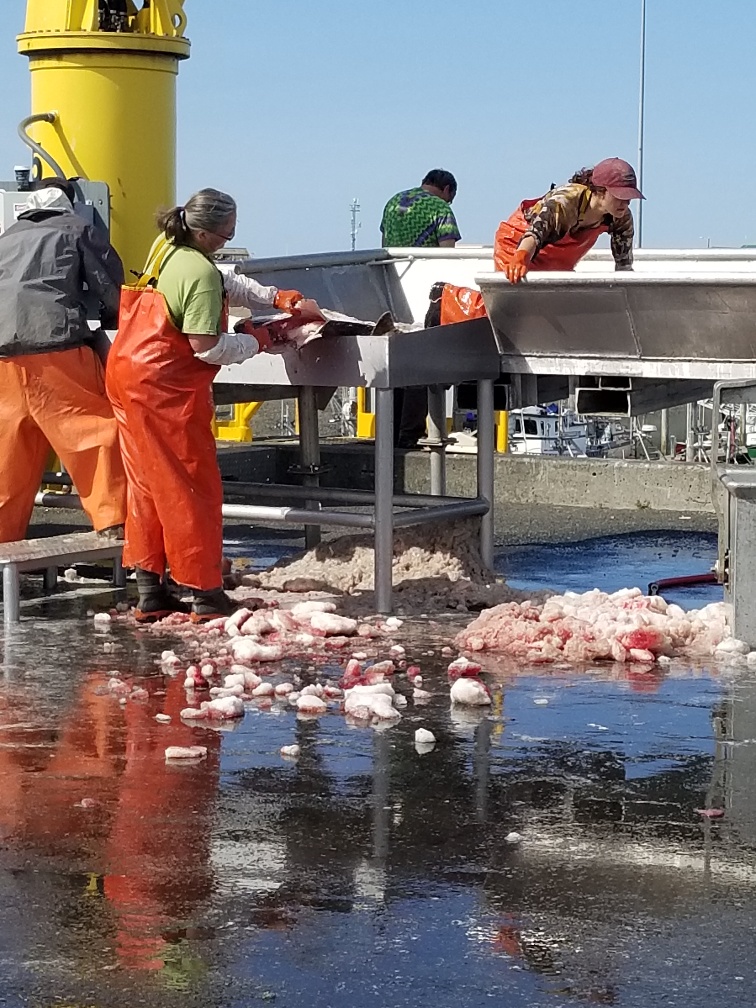
Our next destination, after Denali, was Homer, where our son-in-law Charley’s sister lives with her family. Our visit coincided with the last night of our daughter Becky and family’s visit. Homer is a fishing town (it calls itself the “world halibut capital”) on the Cook Inlet, about 4 hours drive south of Anchorage. It has a long spit of land where the fishing boats come in (the longest such spit in the world). We spent time watching them process the halibut catch, a coordinated display of strength and skill.

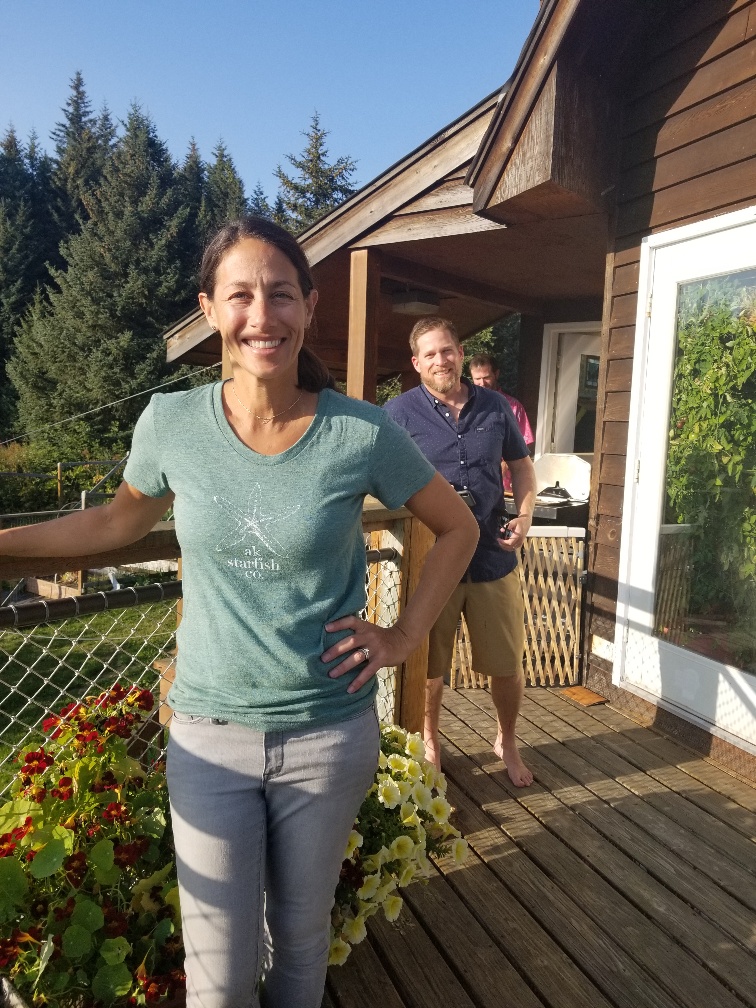
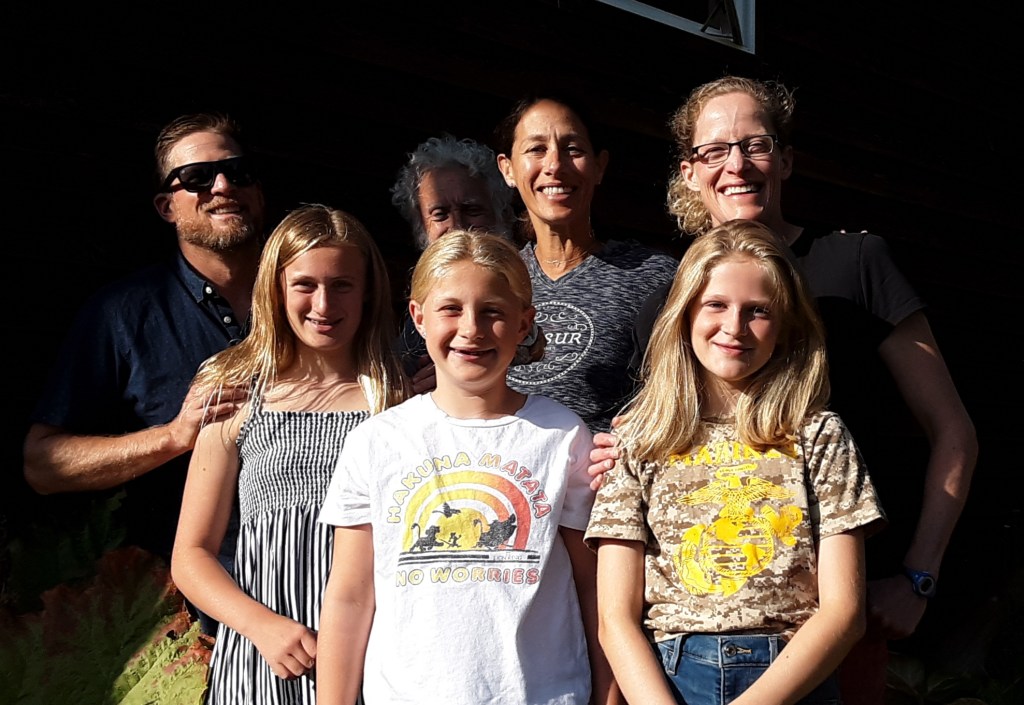
And we spent a lovely evening with Becky, Charley, and our two granddaughters, and Charley’s sister Emmy, her husband Ted and their 2 kids. That’s Ted hidden in the first picture below, and Emmy on the right, behind Elsa in the second picture.

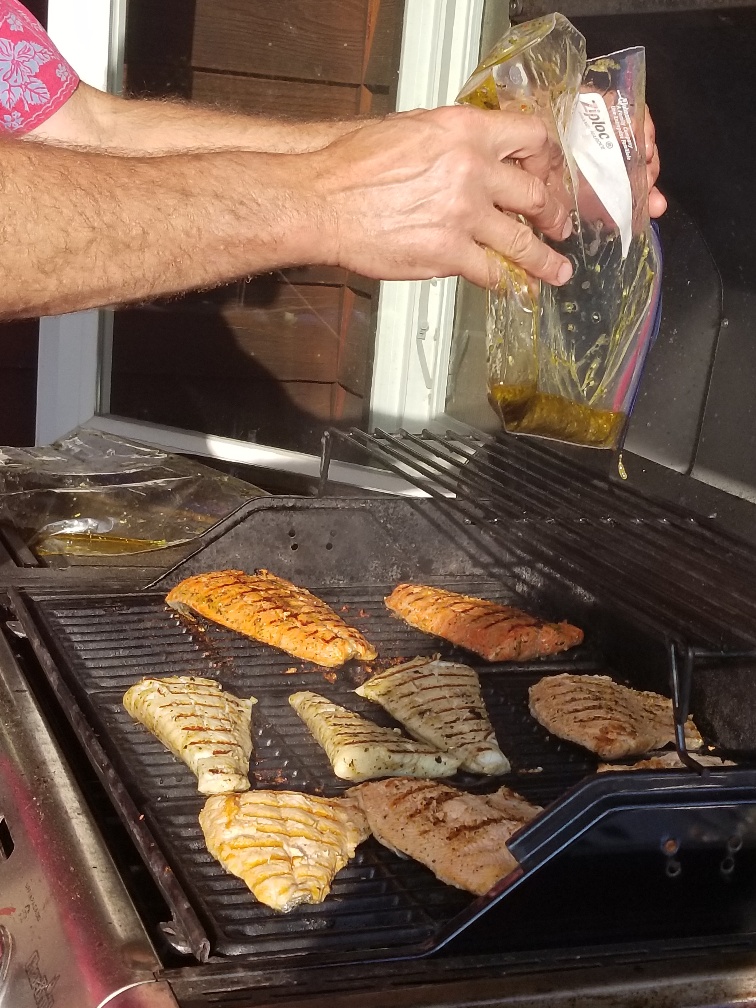
They made an incredible spread involving many kinds of seafood and garden veggies. Some of the salmon in the next photo had been caught by granddaughter Merrill. Those are Ted’s hands at the grill.

We were delighted to get to know this branch of our wonderful extended family.

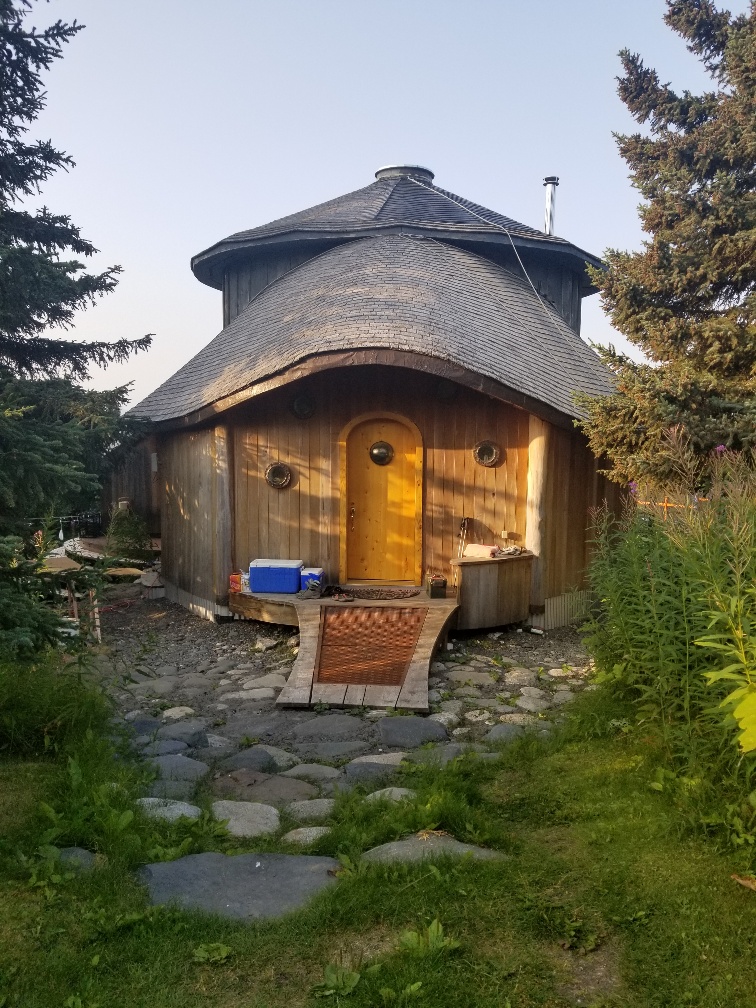
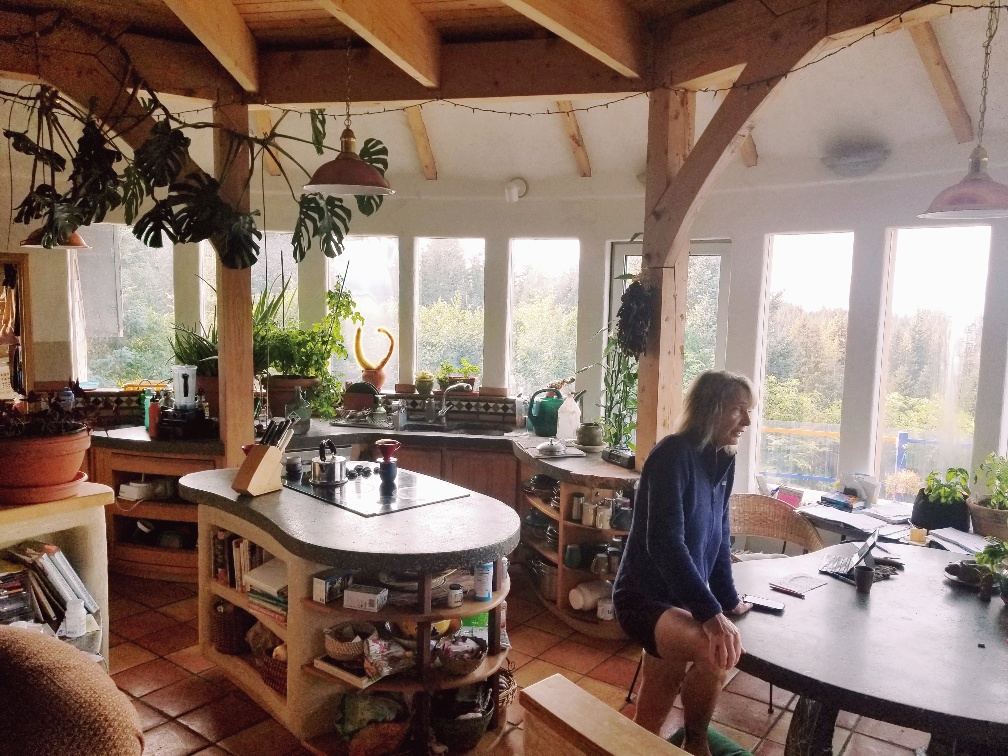
The proprietor of our bnb while we were in Homer was a woman who was a former union carpenter, who had built an incredible house. (That’s not the building we stayed in.)

Post #16: Berkeley Fendels Totem – Inspired by our visit to Saxman Village

From Joe (Yossi):

We learned about Tlingit culture in Saxman Village. Part of this culture is a reluctance to write down stories – or anything else for that matter, relying instead on faithful oral transmission. The only permanent markers of communication they produce are the totem poles, which serve more as illustrations than as records.

This reluctance to write is something Jews are actually familiar with. Rabbinic commentaries were similarly transmitted purely by oral tradition until changing circumstances – most notably the loss of territorial independence at the hand of the Romans – drove Yehuda HaNasi to commit the Mishna to paper, beginning a national dedication to study of written texts that has been a cornerstone of Hebrew cultural maintenance for the last 1800 years.

We have encountered some Tlingit who, identifying us as Jews, note the inspiration they have drawn from the Jewish diaspora experience in shifting their approach to cultural maintenance in changing circumstances.

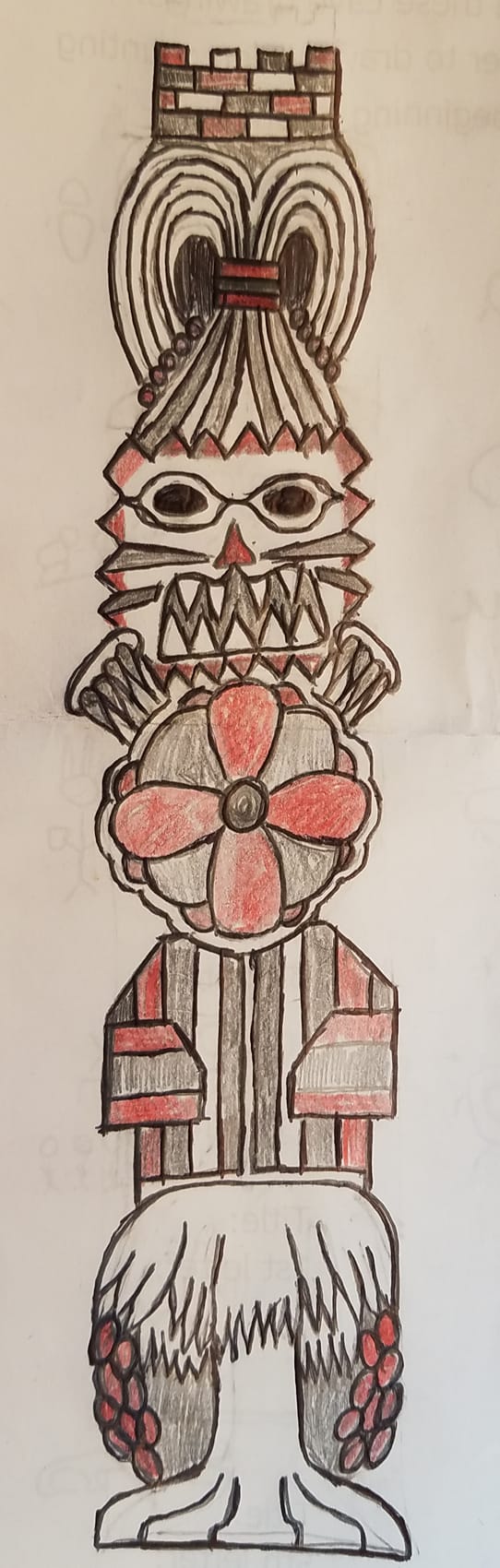
So in reciprocity, I have sketched the story of my family’s journey to Jerusalem in totem pole form, inspired by my time here in Tlingit territory.

Like the Tlingit totems we saw, this one is highly representational, rather than narrative, and colored only in the older black and red colorings of Tlingit totems.

The bottom image is a date palm, representing Tamar, whose name comes from the Hebrew word for date palm. Above that is a coat, representing me since my namesake Joseph in the Torah is associated with a coat. Above that is a rose, representing Shoshana whose name comes from the Hebrew word for rose. Above that is a lion, representing Ari whose name comes from the Hebrew word for lion. Above that is a bundle of wheat, representing Amir whose name comes from the Hebrew word for a bundle of wheat. (Do you see a pattern? My creativity has limits.) And at the top is a fortified wall, representing the city of Jerusalem where we lived as a family for a year to experience our own “changing circumstances”.

Post #15: Glacier Bay, August 9

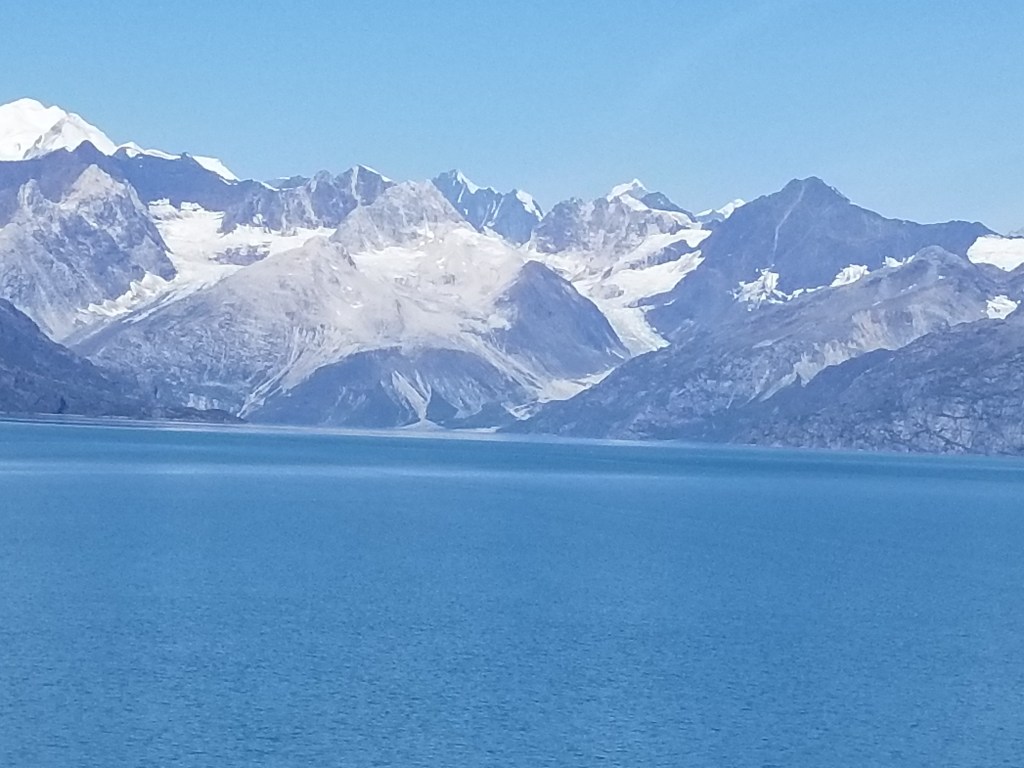
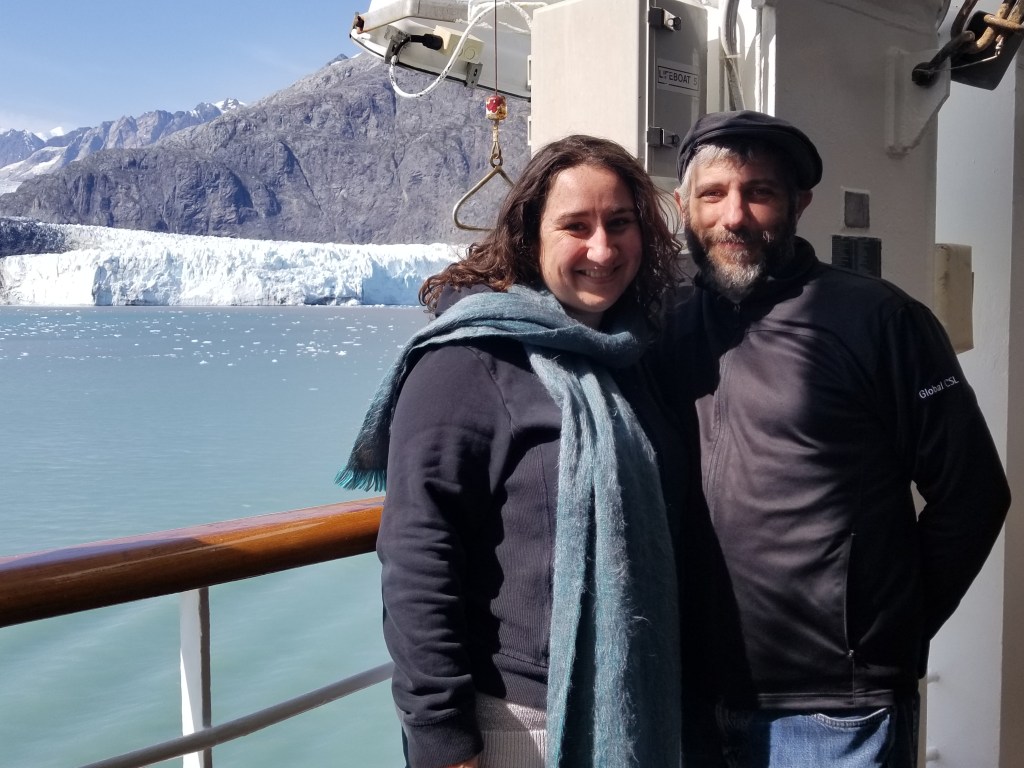
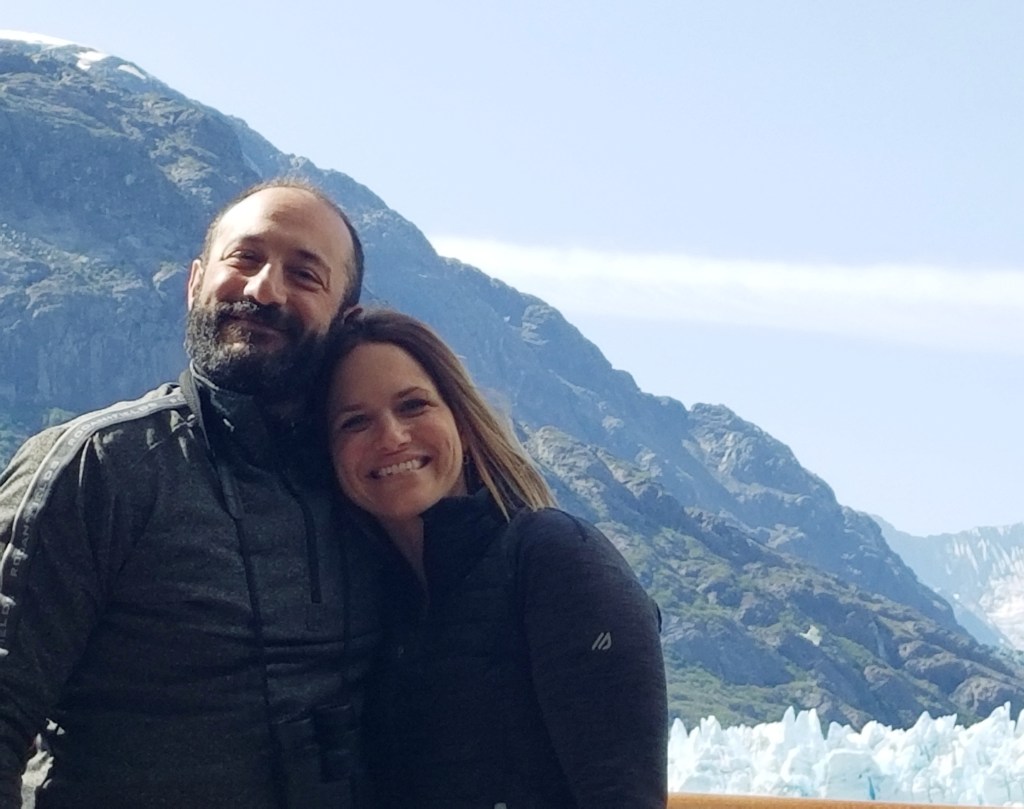
From Nina: Seeing Glacier Bay is a moving and profound experience. As you sail in, there is a glacier (I think it’s the Pacific Crest Glacier) with a massive ice cave right in the front. Different glaciers look really different. One is called Johns Hopkins glacier, by an explorer who went to school there.

The cruise line treated the experience reverently. A US Park Ranger was on the boat a good part of the day, and her comments were piped throughout the ship. She said that John Muir came to Glacier Bay in the early 1900’s, then came back 5 years later, and noticed what seemed to him to be dramatic changes. It influenced his thinking about environmental risks and issues. Since it is currently the summer of the hottest year on record for Alaska,  we heard “white thunder,” the sound of ice cracking and falling. Once we saw large chunks of ice break off.

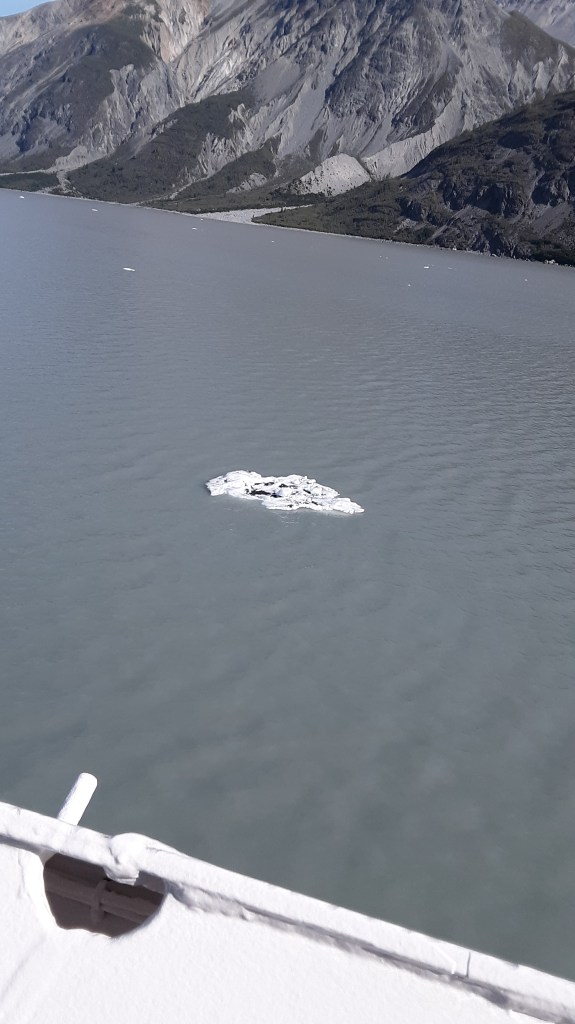
From Dan: Here’s a photo of a huge chunk of ice (probably 20 feet long) floating in the bay:
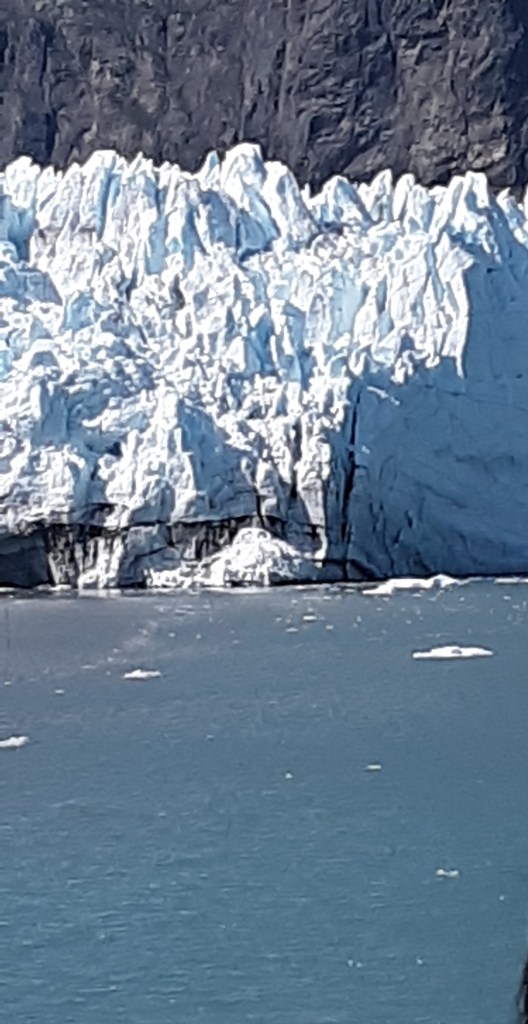
And some photos of a massive glacier as we approached. It was hard to assess the size from a distance, but this is about 250 feet high:

Back to Nina: The glaciers have changed over recently recorded time (the past 200 years), at one point taking over Hoonah Tlingit land, now retreating under global warming. While see the glaciers was astounding, it felt intensely sad. The continued existence of these glaciers, as well as the polar ice caps, is extremely tenuous. I wondered if our grandchildren would be the last generation to see them. what the ripple effects of their loss would be and how we would adapt. We simply must elect people who care about the environment and will fight global warming.

From Dan: And that was our last major component of the cruise. We continued for another day and a half at sea, arriving in Seward on the morning of Sunday, August 11. See “Post #4: Denali” and any posts after this one for Dan and Nina’s continued adventures,

Post #14: Skagway Part 2

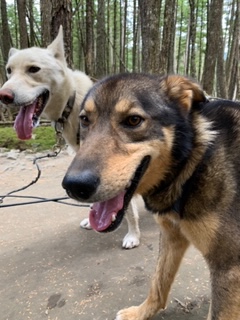
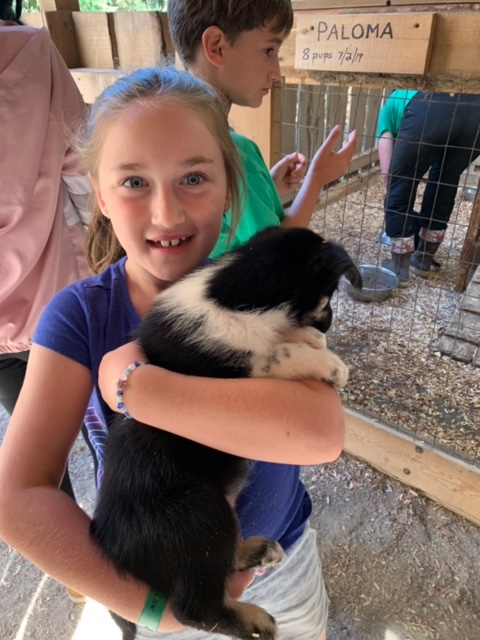
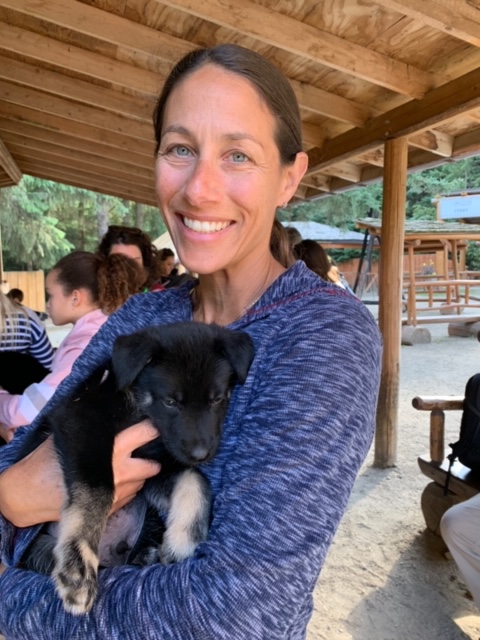
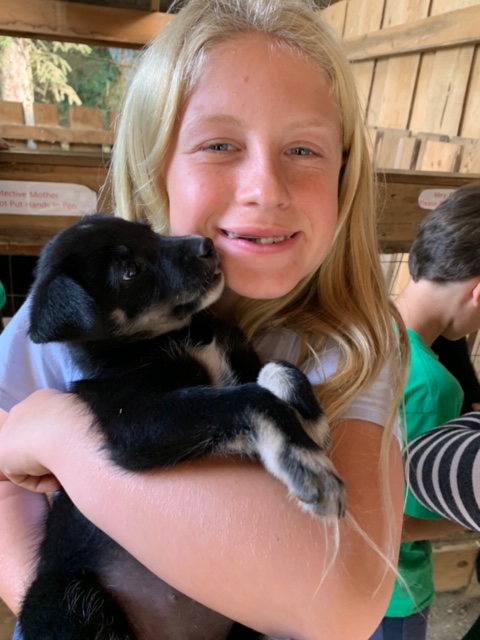
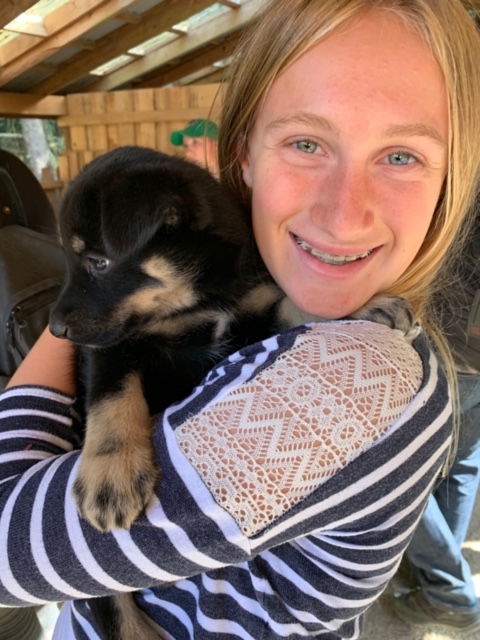
From Nina: In the afternoon of Aug 8, we visited a camp for raising and training sled dogs for races like the 1000-mile Iditerod. We all got a ride in sleds (on wheels), pulled by the dogs, and then got to hold puppies.

From Dan: The ride with the dogs was amazing. The mushers (people who run the dog sleds) had a very personal knowledge of each dog, and could call out commands to them individually by name.

PUPPIES

by Phoebe, age 8

It was really cool to go sledding with dogs instead of reindeer like usually. I really liked holding the tiny little puppies. I love puppies!

PHOTOS ON THE WAY BACK

Enroute back to the ship from the sled-dog site, we stopped at an overlook. Down below were the last fragments of a cabin that once housed Jack London (I think). Here are some photos from that spot:

Becky called this one “the original 5”:

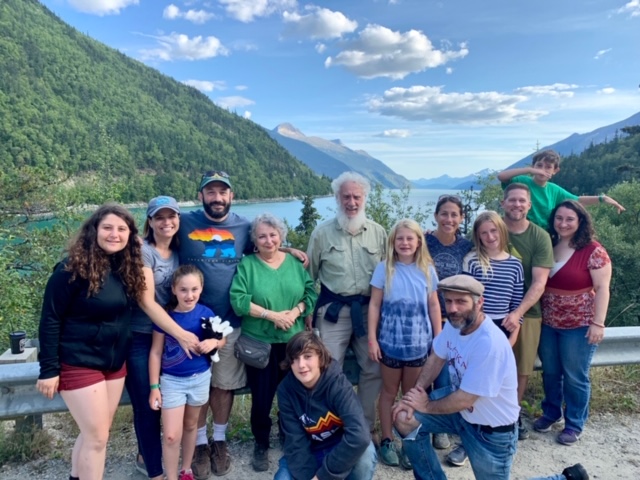
And here’s all of us:

Post #13: Skagway, part 1

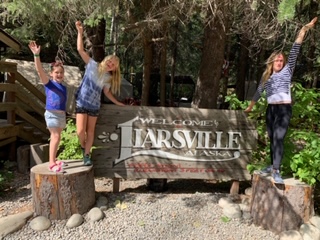
LIARSVILLE

Port of call #3 was Skagway, where we spent the day of August 8. Our group went by bus to a “town” called Liarsville:

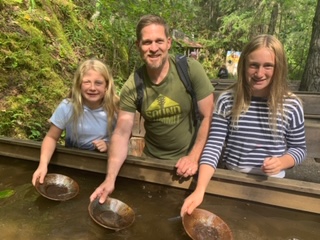
where we had a salmon bake lunch, watched a vaudeville-like show, and then panned for gold.

PANNING FOR GOLD

By MERRILL, age 12

One fun thing we did was gold panning in Liarsville. The four steps are scoop, shake, tilt, and pour. We all earned several gold flakes and learned that around 8 flakes would be worth a few dollars. We had lots of fun gold panning and will remember it for the rest of our lives.

Design a site like this with WordPress.com
Get started